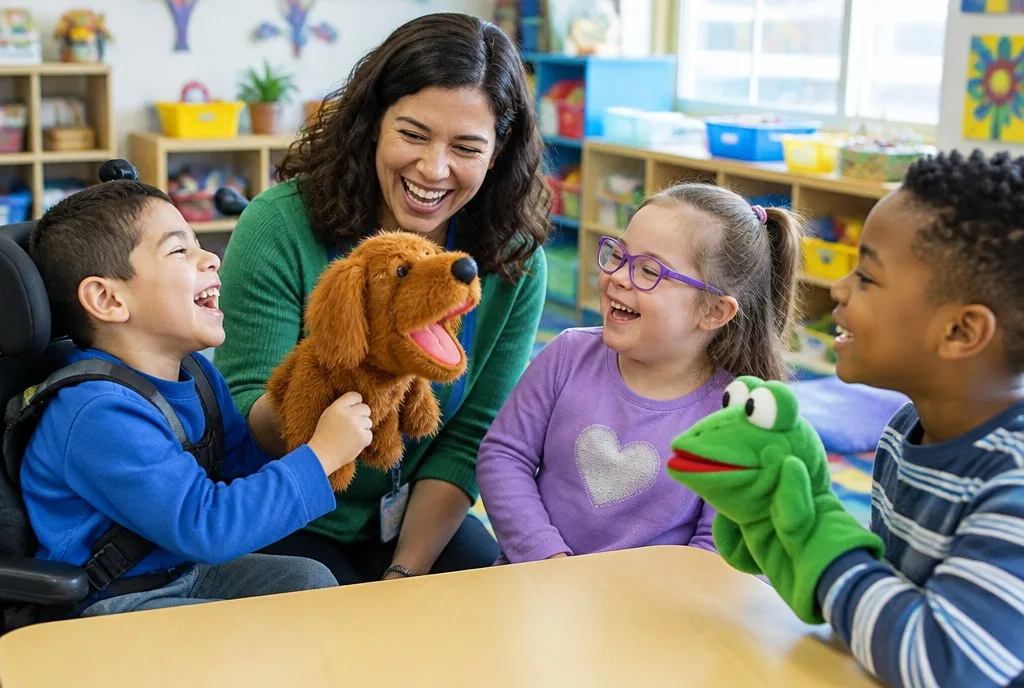
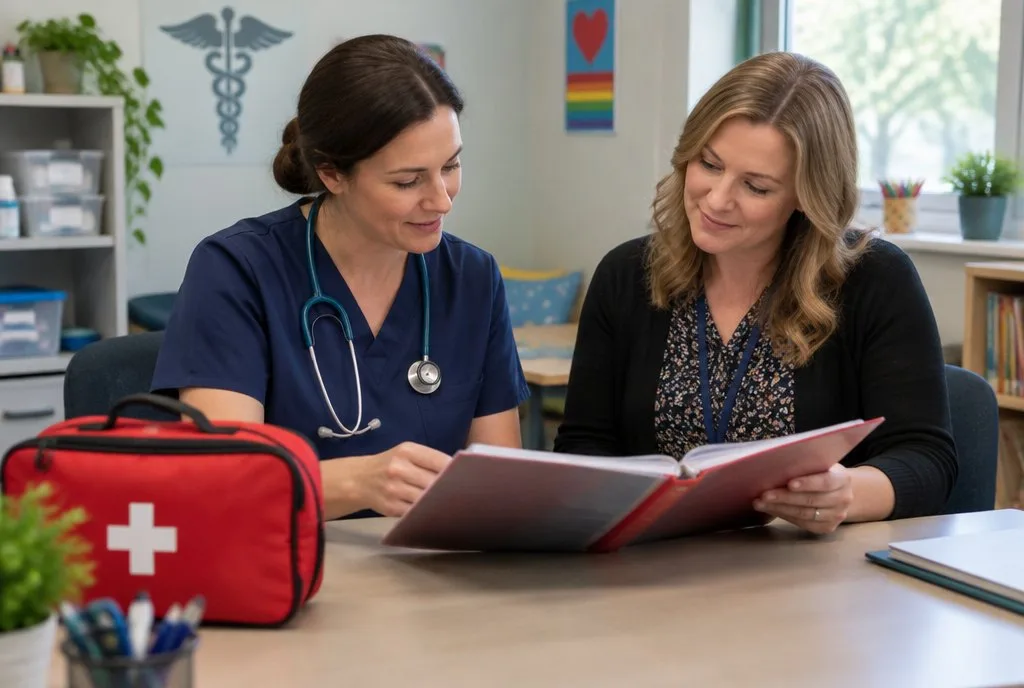
The classes often have many adults in the classroom. There is always the teacher and should be an assistant. There should also be a speech therapist, occupational therapist, physical therapist, and social worker who service the program. These individuals may work with children in the classroom or may pull one or more children out of the classroom to work on the goals for that child. The teacher and therapists work together to plan how to best support each child. Therapist services within the classroom are frequently the best way for each child's goals to be addressed because they are then working on the skills within the context of how they will be using them. At this age, one skill often impacts another, so the approach of working on improving a skill while working on general learning of all skills is often the most effective.
Advertisement
Each child in the classroom will have an Individualized Educational Plan, or IEP. This is a plan that is written with the parents, teacher, therapists, and administrators. The plan lists the goals and objectives that the team wants to help the child work on. It also includes the services (time in the classroom and the time that each therapist will work with the child) the child will receive. Teachers and therapists use the IEP to plan for the child.Early Childhood Special Education classrooms implement a preschool curriculum to build preacademic skills in all of the children. These skills include learning colors, numbers, letters, counting, patterning, and shapes. Preschool curriculum also includes learning how to participate in group learning experiences, fine motor skills (beginning writing, cutting, etc.), sharing, and other skills to help prepare children for school. The activities should be hands on and play oriented. Play time, games, and interactive activities ate the best for helping young children learn. These are the most motivating for young children and lead to the mastering skills.
Early Childhood Special Education classes are positive environments to support young children's learning to help them prepare for Kindergarten (its a german word which is translated: "childrengarden") and future school experiences.