![]() |
|
D
|
|
Bulletin Boards |
Front page |
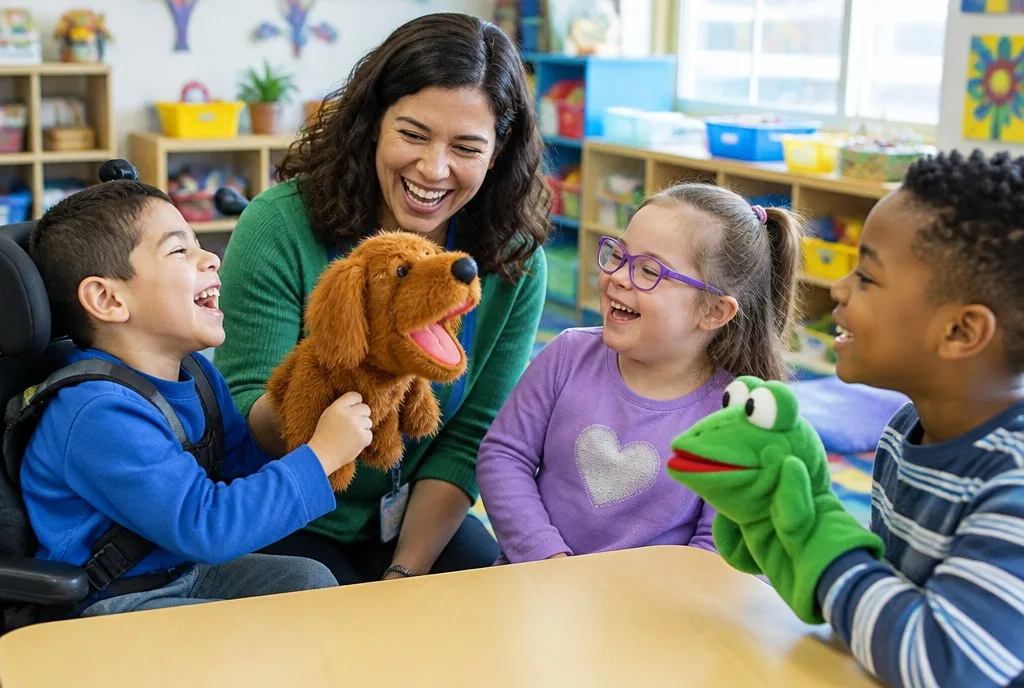
PRESCHOOL HOLDS KEY SOCIAL OPPORTUNITIES FOR KIDS WITH SPECIAL NEEDSDecember 12, 1999Since preschool is as much a social experience as it is an educational one, the inclusion movement presents some new opportunities for children with disabilities to develop peer support systems in preschool classrooms. With a little help from their friends, as the Beatles used to say, children with disabilities can learn to do more than just get by -- they can become active, "included" members of the class, according to University of North Carolina researchers Barbara Goldman and Virginia Buysse. Preliminary observations from their study on how valuable friendships can be to young children with disabilities suggest teachers and parents should pay more attention to potential pals. "Teachers for the most part are telling us they have a sort of laissez-faire approach," Goldman said. "They 'let friendships develop.'" This may work for typically developing children, the researchers said, but many children with special needs could use a facilitator to boost a budding friendship. Children with language problems or mobility issues, for example, could easily be left out of a group or pair simply because of those barriers. Goldman and Buysse, who are working through UNC's Frank Porter Graham Child Development Center, presented their observations Friday during a presentation at the Council for Exceptional Children's Division for Early Childhood conference in Washington. When friendships form between typically developing children and those with special needs, play is much more sophisticated, Buysse said. In addition, the typical kids are more able to make accommodations for the children with special needs, she said. This will be a key factor for both children as they get older, helping the typical child to understand and get along with different types of people and building a support network for the child with special needs. The young children Goldman and Buysse have been studying show no discriminatory attitudes toward disability, gender or ethnicity. Kids do not choose their friends based on ability, but rather based on whether a child is "nice" or "mean," Buysse said. Therefore, unlike older children and adults, children at the preschool level can easily be encouraged to develop friendships regardless of developmental differences. Most importantly, teachers and parents need to actually watch for such friendships forming. There are some obvious signs and a few less obvious signs of budding friendships they can look for, such as two children who play together or "hang out," playing with their own things but in the same physical area. Within a large group setting, such as the "circle time" that is common in preschool classrooms, two friends will still play together or focus on each other. Friends often do the same thing, such as play with the same set of toys, even if one child is not particularly interested in it. That child will willingly defer to the other's interest so they can be together, Goldman said. In addition, preschoolers who are friends tend to copy or imitate each other and talk in terms of "we" rather than "I." Tag questions, such as "This is our game, right?" help the children check with each other to reaffirm their similarity. To support those relationships, many teachers may have to question the age-old classroom philosophy of "We're all friends here," Buysse noted. Often, the term is misused in place of "classmates," such as when teachers are enforcing rules of courtesy and fair play, she argued. Some teachers may object to the concept of reserving the term "friend" for individual relationships within the group, particularly if it seems to mean excluding others in the group, Goldman added. But it is worth considering, she argued, that the value of the individual friendships developing is greater than that of enforcing the "all for one, one for all" concept at all costs. For example, teachers can allow a pair of children to have some space to themselves during play, simply by not forcing them to include others. The teacher can even go so far as to arrange the classroom to create spaces good for two children to use. In addition, teachers should resist their disciplinary reflex and allow some level of noisy, silly play, Goldman said. "A little giddiness is actually a good thing," she argued. For children with social development problems, it may help to have multiple sets of similar toys or more than one of the same toy for friends to play with. Two train sets or two sets of blocks, for example, allow them to do the same thing together without having to share pieces. For speech or mobility challenged children, teachers need to play a more active role, physically bringing a child near to another or helping the child communicate. This may even mean verbalizing for the child in a conversation with another child to help the flow of play continue, Goldman noted. "This is a very integral way of helping children interact and develop friendships," she said. "Free play seems to be interpreted as free-of-teacher play, but this is an area where some children need teachers a lot." Finally, teachers should work more closely with parents to keep those friendships growing outside the classroom. Simply telling parents who their children like playing with, Goldman said, can make a difference. "Teachers have to take an active role to offer that information. Parents want to know," she said.8 |
![]()